

"Hey Elon, LET'S DOGE FRICTION!" -->Did you know 6.4% of the USA economy is lost to friction! -->There are 110 global patents involved with reducing friction. -->The discovery of fullerenes won a 1996 Nobel Prize in Chemistry -->FIA Formula One Racing has approved nano technology for use in F1 engines.


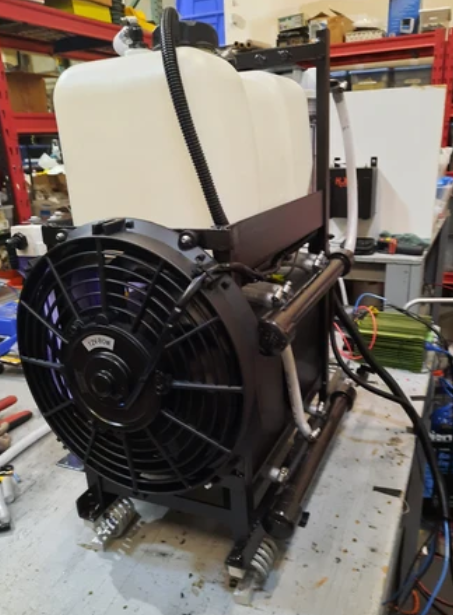
Save a fortune on Diesel Costs! Install your HHO Hydroxyl system and kick fuel costs in the a**. Advanced Dual Vector technologies focus on combustion and friction at TDC. Contact Jim 907-830-8198 | Todd 907-227-9370 - DYI or Full Service Fleet Protection
-
--> NEW - Hydrogen Oxygen HH0 Systems for Power Plants, Trucks and Eq. Call 907-830-8198 - Pre-Order Deposit Next Delivery 45 days out.
Regular price $995.00 USDRegular priceUnit price per -
-> PROVE IT! Test My Oil! - Oil Analysis Test Kits + Oil Additive "Top Up" for Gas Engines
Regular price $49.00 USDRegular priceUnit price per$74.90 USDSale price $49.00 USDSale -
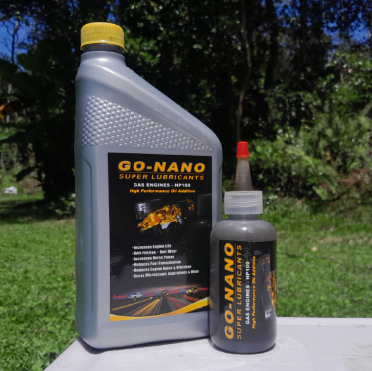
1. Go-Nano Gas Engine Oil Top-up - For All Gas Engines 3 sizes
Regular price From $25.00 USDRegular priceUnit price per -
2. Go-Nano Diesel Engine Oil Top-up - Order 1 Quart - Treats 8 Gallons of Diesel Oil + USPS Flat Rate
Regular price $69.89 USDRegular priceUnit price per -
3. Go-Nano Gearbox & Drive Train Oil Additive - 1 Quart Treats up to 8 gallons
Regular price $89.11 USDRegular priceUnit price per -
4. Best Deal - Order 1 Gallon (4 quarts) Free Shipping Included
Regular price $298.23 USDRegular priceUnit price per -
5. Diesel Engine Oil Top-up - Five Gallons Pail or 20 quart bottles - Treats 160 gallons of engine oil
Regular price $907.66 USDRegular priceUnit price per -
6. Go-Nano Gas Engine Oil Top-up - Five Gallon Pail or 20 quarts - Treats 160 gallons of engine oil
Regular price $767.03 USDRegular priceUnit price per





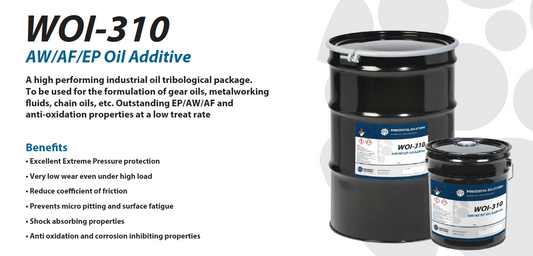


WATCH HOW THE PARTICLES WORK UNDER THE ELECTRON MICROSCOPE "Solid lubricant particles at work" Particles are made in a reactor, tungsten disulfide looks like a onion skin with layering. You will see the particles absorb shock as they exfoliate the multi layering, we have created a blending of Tungsten Disulfide, Molly and Boron.
MASTER TECHNICAL FOUNDATION & THERMODYNAMICS | DUAL-VECTOR HHO Combustion & Advanced Tribological Lubricants
Technology Architecture: Dual-Vector Synergy (Intake Oxidation via 12/24Volt to 110V/220V Commercial HHO Injection + Go-Nano Boundary Solid Lubricants
Modern heavy-duty commercial diesel engines achieve a brake thermal efficiency typically between 42% and 50% under baseline operational parameters. Even in state-of-the-art prototype systems developed by manufacturers like Cummins and Weichai, which have achieved 53% to 55% thermal efficiency ceilings, nearly half of the chemical energy contained within diesel fuel is forfeited as thermodynamic waste before delivering usable mechanical work to the crankshaft.
Standard consumer gasoline engines convert only 25% to 35% of their chemical fuel into work. In heavy-duty industrial diesel power plants, the remaining 50% or more of fuel energy is lost across three specific thermodynamic pathways:
Exhaust Losses (25% to 30%): Escapes directly out of the exhaust stack as unburnt chemical energy, high-velocity thermal waste, and particulate carbon soot.
Cooling Losses (15% to 20%): Radiates into engine oil, water jackets, and cooling circuits to prevent structural metallurgical failure of the engine block and cylinder heads.
Pumping & Mechanical Friction (5% to 10%): Consumed by internal mechanical drag across bearings, valvetrains, piston assemblies, and critical accessory drives such as oil pumps and alternators.
The Problem of Incomplete Oxidation and Micro-Asperities
Up to 40% of internal mechanical engine friction occurs directly at Top Dead Center (TDC) turnaround. As the piston approaches TDC, its mechanical velocity slows to zero before reversing direction. At this moment of zero velocity, the hydrodynamic boundary oil film momentarily breaks down, causing ring-to-cylinder metal contact.
Simultaneously, the slow natural flame propagation velocity of diesel fuel (approximately 0.4 meters per second) prevents complete fuel oxidation within the limited crankshaft angle window near TDC. This incomplete combustion generates hard, unburnt carbon soot.
These microscopic carbon particles circulate within the crankcase oil and act like fine sandpaper, actively scouring cylinder liners, breaking down cross-hatch honing patterns, causing bore glazing, and destroying protective oil films. The resulting loss of ring-pack seal causes blow-by, elevated crankcase pressures, reduced compression efficiency, and increased fuel consumption.
The Dual-Vector Synergistic Mechanism
CBG USA and Go-Nano Lubricants combine combustion kinetics with boundary tribology into a self-reinforcing, closed-loop mechanical system.
Vector 1: Intake Oxidation (110V / 220V Hydroxyl Injection) Introduces a metered, on-demand stream of hydroxyl gas (66% pure hydrogen, 33% pure oxygen) directly into the engine's intake air charge.
Acts strictly as a chemical combustion catalyst, not a primary fuel substitute. Hydrogen's flame velocity exceeds 2.5 meters per second, compared to diesel's 0.4 meters per second, accelerating the flame front by more than six times.
Forces combustion to complete earlier and closer to Top Dead Center, shifting waste heat energy into downward crankshaft torque.
Reduces unburnt carbon soot, black smoke, and particulate formation by up to 70%, while reducing exhaust gas temperatures (EGTs) by 10°F to 25°F under continuous electrical and mechanical loads.
Vector 2: Surface Tribology (Go-Nano Lubricants) Introduces spherical nano-scale tungsten disulfide (WS2) particles directly into the crankcase oil.
Under extreme contact pressures and frictional heat exceeding 300,000 PSI at TDC, these sub-micron spherical particles embed into the microscopic valleys and asperities of the metal surfaces.
Converts sliding boundary drag into rolling mechanical friction during zero-velocity piston turnaround.
Dynamically seals the piston ring-to-liner interface, restoring cylinder compression, preventing blow-by, and extending oil service intervals by up to three times.
The Synergistic Feedback Loop: Lowering soot generation via intake oxidation prevents abrasive carbon particles from abrading the Go-Nano protective tribofilm. In turn, the preserved nano-tribofilm maintains higher dynamic cylinder compression, which ensures cleaner, hotter, and more efficient diesel combustion. (read more...)

CASE STUDIES - PROVEN AND TESTED. View / DOWNLOAD our slide deck CLICK HERE
Over $1M in Annual Fleet Savings for fleet of trucks and rolling stock.GO-NANO LUBRICANTS is a brand of CBG USA | Established 1990 | 750 W. Dimond Blvd. Ste 103-743 Anchorage, AK 99515 | Jim @ 907-830-8198 | Todd @ 907-310-1957
Hawaii: 808-493-7370 | KAU District, Big Island, PO Box 977, Naalehu HI 96770
Inquire about our National and International - Servicing Dealer Program - 907-830-8198
Customer Engagement Proposal
Optimizing Fleet Maintenance with Go Nano Lubricants
Traditional fleet maintenance programs follow standard oil change intervals of approximately 50,000 miles, requiring multiple oil changes per year per truck. This practice, while essential for vehicle health, results in considerable expenses related to lubricant procurement, labor, and equipment downtime. By transitioning to Go Nano Lubricants, fleets can extend oil change intervals up to 100,000 miles, drastically reducing these costs.
For a fleet of 200 trucks, this shift translates to:
- Reduction in annual oil changes from 2.4 per truck to 1.2
- 80% savings on oil procurement, with lower consumption per truck
- in direct oil cost savings (ABOUT $20,000)
- Lower labor costs due to reduced service frequency, saving $120,000 annually
- Extended engine and drivetrain lifespan, minimizing unexpected repairs
Cost Savings Breakdown.
Based on our data analysis:
- As an example, the current fleet consumes 20,000 quarts of oil annually under a conventional maintenance schedule.
- By implementing Go Nano Lubricants, oil consumption drops to 10,000 quarts per year.
- This reduction alone results in savings of $20,160 annually on oil purchases.
- Labor savings amount to an additional $120,000 annually.
- Extended equipment life further reduces capital expenditures on new vehicles and repairs.
Financial Impact & ROI
Implementing Go Nano Lubricants leads to immediate and long-term financial benefits:
- Up to 80% reduction in annual oil costs
- 50-75% reduction in labor and maintenance expenses
- Extended vehicle lifespan, reducing capital expenditures on new equipment
For theexecutive team, these findings highlight a strategic opportunity to enhance profitability and reduce operational expenses. The savings outlined in this analysis demonstrate that this solution is not only cost-effective but also essential for long-term sustainability in fleet operations.
Conclusion By adopting Go Nano Lubricants, a fleet can achieve unparalleled cost savings, streamline maintenance schedules, and extend the lifespan of their assets. This data-driven approach ensures that executive leadership makes informed decisions that enhance operational efficiency and profitability. The financial benefits are clear—reducing costs while maintaining peak performance is now within reach.
For a personalized consultation on implementing Go Nano Lubricants into YOUR maintenance program, contact us today to explore a tailored savings strategy.